Industrial FDM 3D Printing for Functional Prototypes
Transform your digital concepts into tangible, high-strength components with our fused deposition modelling services. We provide Brisbane engineers and designers with the mechanical reliability required for rigorous testing and end-use applications.
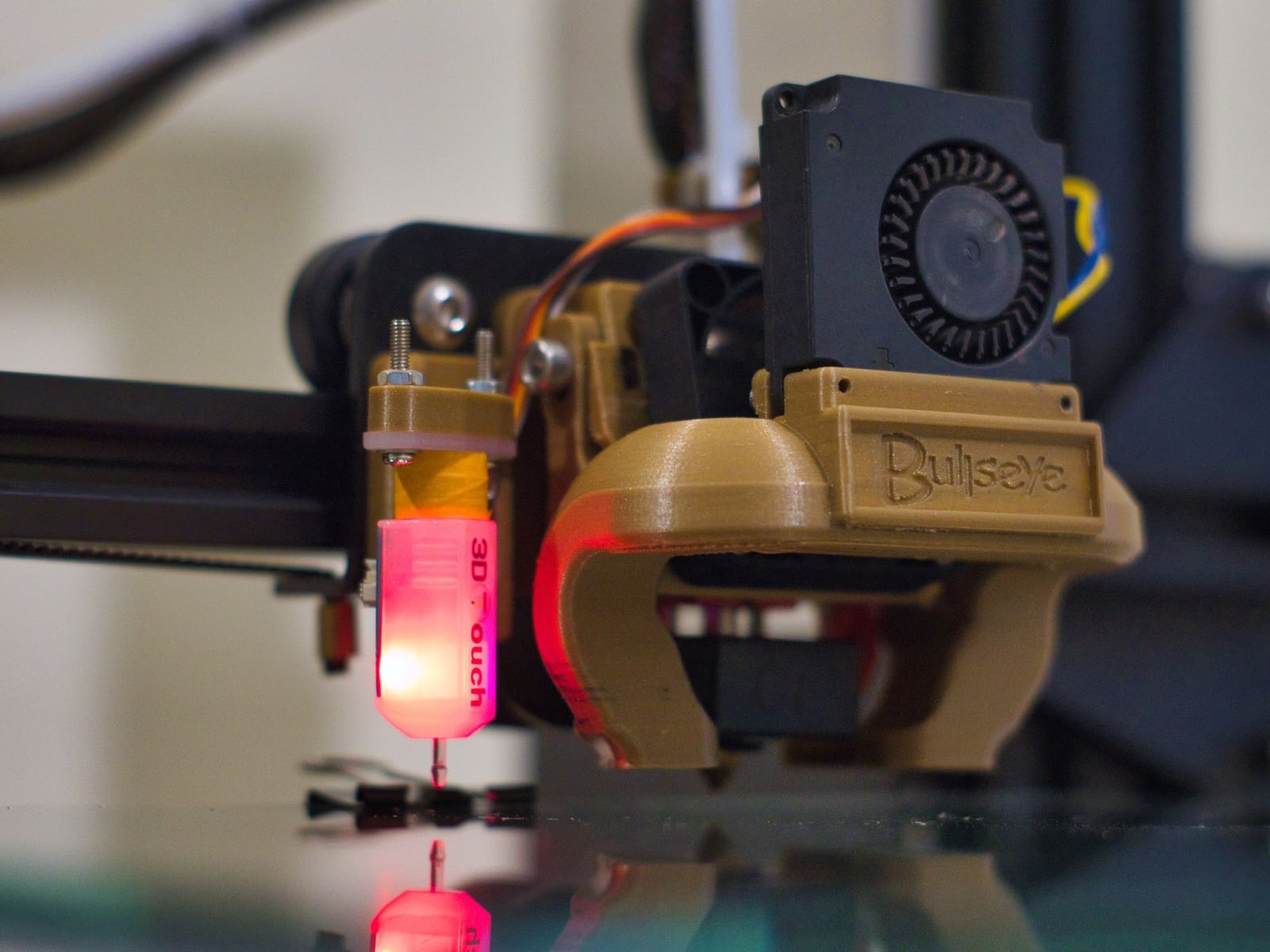
Fused Deposition Modelling (FDM) remains the cornerstone of rapid prototyping due to its versatility and the availability of engineering-grade thermoplastics. At Bandhdelta, we utilise a fleet of 14 machines to ensure that your project moves from a CAD file to a physical part without unnecessary delays. Whether you are developing a proof-of-concept for a startup or requiring durable jigs and fixtures for a production line, our FDM workflow is optimised for dimensional accuracy and structural integrity.
Our approach focuses on the intersection of material science and mechanical engineering. We don't just "hit print"; we analyse your part's intended load-bearing requirements and environmental exposure to suggest the optimal orientation and infill density. By leveraging materials like PETG for chemical resistance or ABS for thermal stability, we ensure that your prototype behaves predictably in real-world conditions, reducing the number of iteration cycles needed to reach your final design.
The FDM Production Process
File Validation: We review your STL or STEP files for manifold errors and wall thickness to ensure printability.
Slicing & Strategy: We determine the optimal layer height and support structures to minimise post-processing.
Additive Fabrication: Your part is printed using precision extruders with a maximum build volume of 400x400x400 mm.
Final Inspection: Support removal and dimensional verification against your specifications before dispatch.
Who Benefits from FDM Printing?
FDM is the ideal choice for those who need "rugged" parts. Our typical clients in Brisbane include mechanical engineers who require functional prototypes that can be bolted, screwed, or stressed. Startups use our services to create ergonomic models that feel right in the hand before investing in expensive injection moulds. Additionally, local workshops rely on us for custom tooling, brackets, and replacement parts that are no longer available from original manufacturers.
How the Workflow Operates
The process begins with a technical consultation. Once we receive your geometry, we evaluate the mechanical stresses the part will encounter. If the part is a simple visual aid, we use standard PLA for speed and surface finish. If it is a functional component, we move to PETG or ABS. We manage the entire queue through our project coordinator, ensuring that your lead time remains consistent. Every part is printed in our 85 m² studio, where environmental controls prevent warping in larger ABS prints.
What You Need to Prepare
To ensure the fastest turnaround, please provide your models in STL, OBJ, or STEP format. We recommend that you define the required tolerances in your documentation; our standard dimensional tolerance is 0.2 mm. If you are unsure about material selection, provide a brief description of the part's environment (e.g., "exposed to sunlight," "contact with oils," or "high-heat zone"). For those unfamiliar with the technical requirements, we suggest reading our guide on how to prepare your 3D model for printing.
Deliverables and Output
Upon completion, you receive the physical parts securely packaged to prevent transit damage. For every order, we provide photographic confirmation of the finished part before it leaves our studio. If the project involved a custom design phase, you will receive the final STL/STEP files after full payment. All parts are delivered cleaned of primary supports, though some evidence of support contact points is inherent to the FDM process.
Timelines and Lead Times
Our average prototype lead time is 3 days, though this varies based on the volume of material and the complexity of the print. Small, simple parts can often be completed within 24 hours. For larger batches or complex engineering parts requiring high infill, we provide a specific timeline during the quoting phase. Please note that urgent requests are available but incur a 30% urgent fee to prioritise your project in our production queue.
Exclusions: What We Do Not Print
To maintain safety and legal compliance, Bandhdelta does not accept orders for the following: weapons or any components intended for firearms, medical implants or surgical devices, and aerospace or automotive parts that require official safety certification. We also strictly adhere to intellectual property laws and will not print copies of protected trademarks or copyrighted models without verified authorisation from the owner.
Pricing Structure and GST
Our pricing is transparent and based on the actual consumption of material and machine time. We calculate the cost per gram of thermoplastic used, including the necessary support structures. All prices quoted are in Australian Dollars (AUD). As a registered Australian business, we apply a 10% Goods and Services Tax (GST) to all invoices. For B2B clients, we offer payment terms of 14 days upon request. Please refer to our Terms and Conditions for full details on deposits and cancellations.
Service Inclusions
- Material selection consultation based on mechanical needs
- Standard support structure generation and removal
- Dimensional verification (±0.2 mm tolerance)
- Protective packaging for Brisbane-wide delivery or pickup
- Pre-shipment photographic quality check
- Technical advice on part orientation for maximum strength
FDM Printing Price List
| Material Type | Price per Gram (inc GST) | Price per Gram (ex GST) |
|---|---|---|
| Standard PLA / PETG | A$1.85 | A$1.68 |
| Engineering ABS | A$2.40 | A$2.18 |
Minimum order value: A$45. For complex geometries requiring extensive manual post-processing, additional hourly rates may apply.
Frequently Asked Questions
What is the difference between PLA and PETG for my project?
PLA is best for visual models, architectural maquettes, and parts that won't face high heat or stress. PETG offers a middle ground, providing better impact resistance and temperature stability, making it suitable for functional brackets and outdoor use.
Can you print parts that need to be heat-resistant?
Yes, for applications requiring higher thermal stability, we recommend Engineering ABS. It is significantly more robust than PLA, though it requires careful printing to avoid warping, which we manage in our controlled studio environment.
How do you handle the payment for custom prints?
We require a 50% deposit before starting the print process. The remaining balance is due upon completion and prior to delivery or pickup. B2B clients may apply for 14-day payment terms.
What happens if the part doesn't fit my assembly?
We adhere to a 0.2 mm tolerance. If the part is within this tolerance but does not fit due to a design error in the provided file, a reprint will be charged. If the error is due to our fabrication, we will correct it free of charge.
Ready to start your project?
Contact our Brisbane studio for a technical review of your files and a precise quote.
Request FDM Quote